
English| EUR
Suggested for you
More currencies
Choose a language
Laguna Grande in Fajardo harbors one of the world's brightest concentrations of bioluminescent organisms. The bay's protected mangrove channels create conditions for millions of dinoflagellates to thrive, producing visible blue-green light when disturbed after dark.
Quick answer
A bioluminescent bay is a shallow coastal water body where high concentrations of Pyrodinium bahamense dinoflagellates emit light through a chemical reaction when agitated. Laguna Grande maintains one of the planet's densest populations of these single-celled organisms—up to 720,000 per gallon—producing visible bioluminescence year-round. The phenomenon requires specific salinity, temperature, and nutrient conditions found in only a handful of locations worldwide.
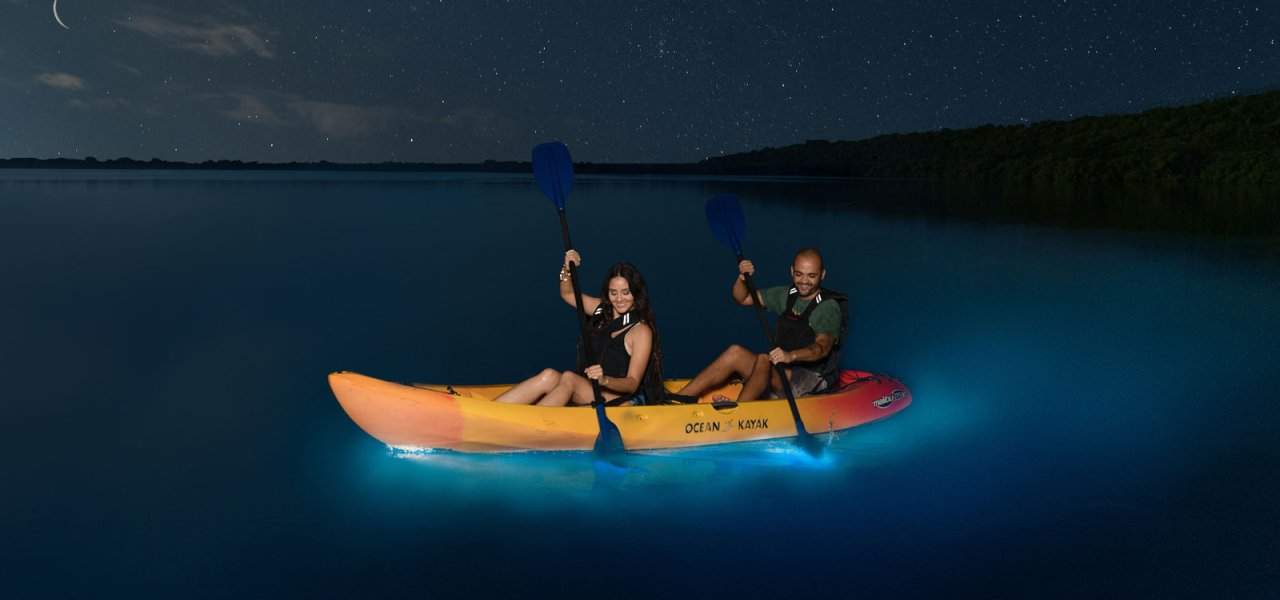
Laguna Grande glows because of a defense mechanism. When a kayak paddle cuts through the water or fish dart beneath the surface, Pyrodinium bahamense dinoflagellates release luciferin and luciferase enzymes that produce cold light—a biochemical response evolved to startle predators. The reaction lasts less than a second per organism, but millions of dinoflagellates fire simultaneously, creating trails of blue-green luminescence visible to the naked eye. The bay's mangrove ecosystem provides the narrow conditions these organisms require. Red mangrove roots filter runoff and stabilize salinity between 25 and 35 parts per thousand. Vitamin B12 from decaying mangrove leaves feeds the dinoflagellate population. Shallow depth—most of the bay ranges from four to six feet—keeps water temperatures stable and limits tidal flushing that would dilute concentrations. Remove any of these variables and the population collapses, which is why bioluminescent bays remain rare. What is a bioluminescent bay depends on more than biology. Light pollution from coastal development can drown out the glow even when dinoflagellate counts remain high. Laguna Grande sits within the Las Cabezas de San Juan Nature Reserve, where development restrictions and minimal artificial lighting preserve the darkness needed to see the phenomenon. Licensed operators navigate the reserve's channels using silent kayaks rather than motorized boats, minimizing disturbance to the mangrove habitat that sustains the bay. The intensity of the glow varies with lunar phase and weather. New moon periods between June and November produce the darkest skies and most dramatic displays. Cloud cover blocks ambient starlight and intensifies contrast. Water clarity fluctuates with rainfall—heavy storms introduce sediment that scatters light and temporarily reduces visibility. Understanding these variables helps visitors time their arrival for optimal viewing conditions rather than leaving the experience to chance.
“The bay maintains up to 720,000 bioluminescent dinoflagellates per gallon, one of the highest recorded concentrations on Earth.”
Laguna Grande is a unique ecosystem where microscopic organisms create light through a specialized chemical reaction. This process occurs within the sheltered waters of the Fajardo coast.
This species of dinoflagellate is the primary source of bioluminescence in Laguna Grande. The name translates to spinning fire of the Bahamas, reflecting its movement and light production.
Bioluminescence results from a reaction between the molecule luciferin and the enzyme luciferase. When disturbed by movement in the water, these dinoflagellates release a blue-green light as a defense mechanism.
The light produced by these organisms is considered cold light because nearly 100 percent of the energy is emitted as radiation rather than heat. This allows the dinoflagellates to glow without damaging their cellular structures.
The bay is surrounded by red mangroves that provide essential nutrients for the dinoflagellate population. Tannins released by mangrove roots are believed to support the specific biological needs of these organisms.
Laguna Grande maintains a narrow connection to the ocean, which keeps the dinoflagellates concentrated within the bay. This restricted water exchange prevents the organisms from being flushed out into the open sea.
Scientists observe that the light display may serve to startle predators or attract larger organisms that eat the predators of the dinoflagellates. This complex interaction helps regulate the local aquatic food chain.
Laguna Grande operates exclusively during evening hours to facilitate viewing of the bioluminescent organisms. The bay is open Monday through Saturday.
Access to Laguna Grande is free of charge. Entry to the bay is strictly regulated and requires participation in an excursion led by a licensed tour operator.
Verdict: While the bay entry itself costs 0 USD, visitors pay only for the services provided by licensed tour operators who facilitate access.
Laguna Grande is located in the Las Croabas area of Fajardo, Puerto Rico. The most direct approach for visitors is via car or taxi to the designated departure point.
PR-3 to PR-987 in Fajardo
PR-3 to Carr. 987 Km. 5.9
Access is restricted to licensed tour operator excursions, so ensure you have a confirmed reservation before arriving at the address at Carr. 987 Km. 5.9. Plan to arrive within the 19:00–21:00 window for optimal viewing conditions.
The best arrival window is 19:00–21:00, as the darkest night sky conditions provide the most visible bioluminescent display. Aligning your visit with the lunar cycle, specifically during a new moon, further optimizes viewing conditions.
Low humidity, 75–80°F. Clear skies allow for high contrast visibility.
Higher humidity, 80–85°F. Rain showers occur but typically pass quickly.
—
These nights offer a quieter experience on the water compared to weekends.
Verdict: The best time to visit is Monday through Thursday between 19:00–21:00 during a new moon phase in April or October.
Laguna Grande's delicate ecosystem requires strict visitor protocols. Licensed tour operators enforce environmental protections that preserve the bay's bioluminescent organisms.
Everything you need to know about what is a bioluminescent bay
A bioluminescent bay is a body of water that contains microscopic organisms called dinoflagellates, which emit a soft glow when the water is agitated. Understanding what is a bioluminescent bay involves learning about the delicate ecosystem that supports these glowing marine organisms. This natural phenomenon creates a distinct light display when the water is disturbed by movement. Guests curious about what is a bioluminescent bay often find the experience of paddling through these waters to be a highlight of their Puerto Rico trip.
You can experience the Laguna Grande Puerto Rico tour by booking with a licensed operator who navigates the mangroves. These professional guides provide the necessary equipment and insight into the unique habitat, ensuring safe navigation through the channels. Tours are the only way to access this protected environment and view the light display effectively.
There is 0 USD entrance fee; however, access is strictly limited to authorized guided excursions. While you do not pay a direct entry fee to nature, you must reserve a spot with a licensed operator to gain access to the area. All visitors must arrive via these approved programs to protect the ecosystem.
The best arrival window is 19:00–21:00 for the darkest night sky conditions. Arriving during this period maximizes the visibility of the bioluminescent display, as artificial light interference is minimal. Consistency in the moon cycle and weather also plays a role in how clearly you can see the glowing effect.
No, individual access is prohibited to preserve the fragile water quality of the lagoon. You must join a group led by a licensed tour operator, as the bay is a protected natural reserve. This rule exists to prevent environmental damage and ensure that the delicate dinoflagellates thrive.
Yes, families can participate in these excursions, provided they meet the age and safety requirements set by the tour operators. Parents should confirm specific age restrictions with their chosen provider before booking. It is a shared experience that depends on the specific guidelines of the excursion company.
You should wear comfortable clothing that can get wet and bring a towel for after your kayaking session. Since this is an evening activity in a humid environment, insect repellent is also highly recommended. Pack light, as you will be spending your time on the water or in the mangroves.